When should I choose a lifting carton palletizer?
Check the lowest pickup and highest pallet layer with clearance for the tool and cartons. CR30L and CR50L add a lifting column with a standard 500 mm stroke. CR30 and CR50 are fixed-base options.
End-of-line automation
Stack sealed cartons from a conveyor onto pallets using an SCR CR collaborative palletizer. Configure carton pickup, pallet positions and stack height around the end of your packing line.
Prefer email? Send photos and layout →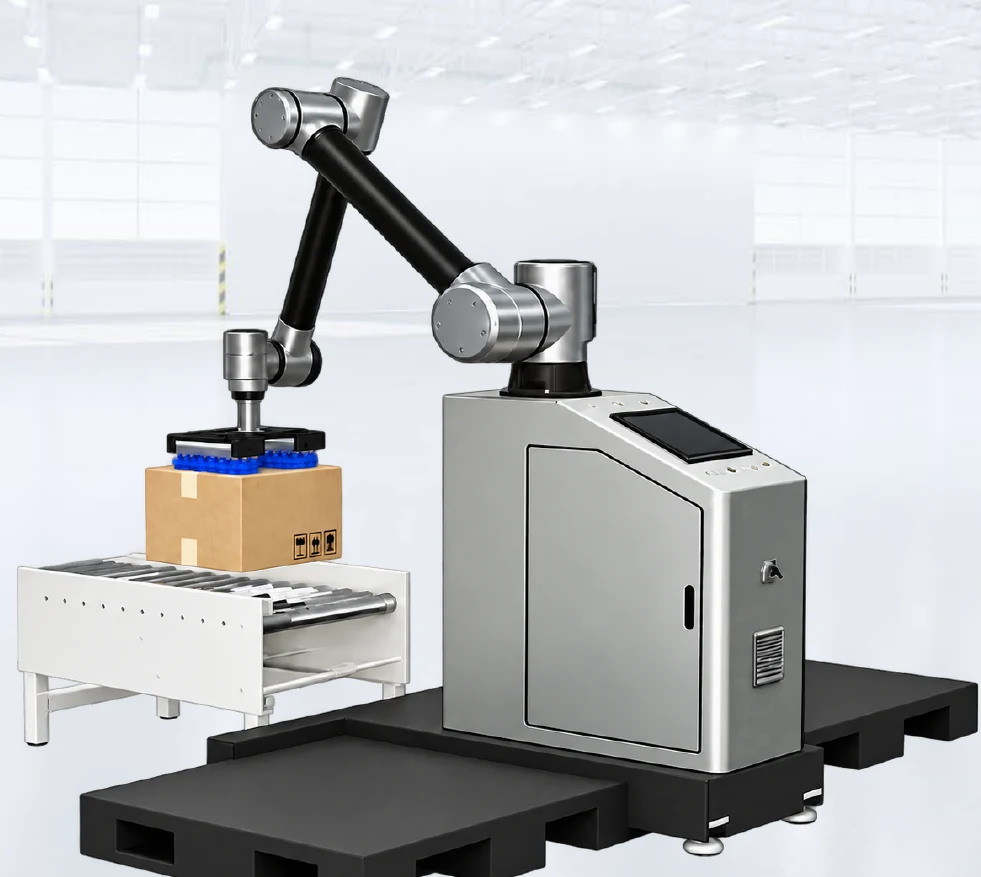
Present each sealed carton in a repeatable pickup position.
Match the gripper to the carton surface, dimensions and combined pickup load.
Set the layer pattern, target stack height and pallet exchange method for the line.
Production pain points
These are the recurring problems plant managers and engineers report when they first contact SCR Robot about automating their production line. Identifying the real bottleneck helps engineering design a system that solves the production problem, not just install a robot.
List each carton’s dimensions, weight and top surface. These details help establish how it should be presented and picked.
Review the conveyor pickup level and each pallet layer with the tool fitted. Use the highest and furthest placement positions when comparing fixed-base and lifting workstations.
Decide how finished pallets leave and empty pallets enter. The exchange method and available buffer are part of the line layout and throughput review.
SCR Robot solution
A line can combine a carton infeed, robot and gripper, pallet staging and controls. Select the CR configuration around the cartons, the line interface and the contract scope. The completed layout defines where cartons are sensed, picked and stacked and how each new pallet is introduced.
Materials and industries
The following materials and industries represent typical applications. SCR Robot evaluates each project against the actual product, line layout, and throughput requirements before recommending a specific configuration.
Food and beverage packaging lines
Consumer goods packing lines
Packaging machinery integration
System configuration
The values below represent typical project ranges and considerations. Final specifications are confirmed after SCR Robot reviews your product photos, dimensions, target output and factory layout.
Robot and tooling
CR30, CR30L, CR50 or CR50L. The catalog maximum payload is 30 kg or 50 kg by model. Review the cartons and tooling together.
Fixed-base and lifting options
Catalog palletizing height including pallet is up to 1,800 mm for CR30 and CR50 and up to 2,300 mm for CR30L and CR50L. Lifting models include a standard 500 mm stroke. Confirm the working envelope for the line.
Conveyor and pallet positions
Review pickup height, pallet dimensions and corner positions at every layer. Confirm how the upstream line signals when a carton is ready.
Throughput
Confirm cartons per minute under the intended operating conditions, including the pickup pattern, stacking height and pallet change.
What to send for quotation
Clear project data helps SCR Robot recommend the robot model, gripper type, conveyor layout, safety scope, and budget direction without slow basic clarification.
FAQ
These answers help you decide what data to prepare and what to expect from the engineering review process.
Check the lowest pickup and highest pallet layer with clearance for the tool and cartons. CR30L and CR50L add a lifting column with a standard 500 mm stroke. CR30 and CR50 are fixed-base options.
We can review the existing infeed and its controls. Send the pickup height, carton direction and arrival rate so the interface can be included in the proposal.
These are catalog maximum payloads. Confirm the combined pickup with the tooling, carton count, load position and movement for your application.
Use the required carton arrival rate and then review pickup, travel, placement and pallet exchange as one process. Output depends on the layout, stack pattern and tool.
Explore related pages
Continue to product series, industry solutions, or case concepts to build a fuller picture before requesting a quotation.
Compare the four fixed-base and lifting models, including drawings and catalog parameters.
See the lifting workstation configuration, carton handling sequence and tooling.
Review load and working positions before choosing a workstation.
Review the infeed and tooling options for filled bags.
Project review
Send product photos, unit weight, dimensions, target output, layout, and destination country. SCR Robot will recommend a practical palletizing system scope and the next engineering discussion.
Allow website analytics?
Help us understand which pages lead to enquiries. We do not send your name, phone, email or project message to analytics. Contact and enquiry features work with either choice.
Privacy & analytics details (Google Analytics)